
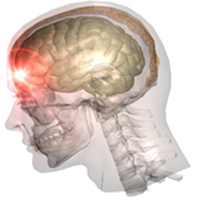
   | Concussion: A concussion is a type of traumatic brain injury (TBI). For example - when two athletes hit their heads against each other, which can cause a concussion for either or both person. From this action, the brain is shook to the point where it bounces against the skull. What many athletes fear of concussions is that it causes change in a person's mental status, which can interfere with the functioning of the brain. If you have any of these symptoms then you are most likely to have a concussion (go see your doctor as soon as possible): • Headache or a feeling of pressure in the head • Temporary loss of consciousness • Confusion or feeling as if in a fog • Amnesia surrounding the traumatic event • Dizziness or "seeing stars" • Ringing in the ears • Nausea or vomiting • Slurred speech • Fatigue Right now your brain is perfectly balanced in your skull, suspended in cerebrospinal fluid that provides protection for the brain. But when the head hits something with a hard enough impact — like a football player slamming into another player's head — this small fluid layer is not enough protection. The brain bumps into the skull's interior, physician Richard Smyada wrote in Scientific American. A bruise develops where the brain initially hits the skull and a second one develops on the opposite side when the brain is jarred back in place. You can think of it as dribbling a basketball — the ball hits the ground and then bounces back and hits your hand. These two bruises that develop on the brain are called the coup and the contrecoup. The brain can actually twist and rotate too, depending on the kind of impact. This twisting motion stretches and strains the nerve cells in the brain. Their ability to send and receive messages from the rest of the body is disrupted because the axons — the long fibers that brain cells send signals through — stretch and sometimes swell. Too much stretching and swelling of these nerve cells means they permanently lose their ability to communicate with the rest of the body. A concussion immediately paralyzes the nervous function of the brain — you can't sense anything for a moment. But this paralysis is reversible, and goes away not too long after the impact. You don't actually have to be knocked unconscious to have a concussion. http://www.businessinsider.com/your-brain-when-you-get-a-concussion-2013-10#ixzz2q9ab9KVS |
